



Long before Afrobeats took over Nigerian airwaves, there was a woman with a guitar and a voice that carried the sound of the Niger Delta across the whole country. Her name is Evi Edna Ogholi, and for a stretch of years in the late 1980s and early 1990s, she was simply unavoidable. If you grew up in Nigeria during that era, chances are you blew out birthday candles to her song, whether you knew her name or not.
Today, people call her the Queen of Nigerian Reggae, and a few even go further and call her Africa’s Queen of Reggae. This is her story.
Early Life and Roots in Isoko
Evi Edna Ogholi was born in Isoko, in what is now Delta State (it was part of the old Bendel State at the time she was born). Her father was a clergyman, Reverend R. O. Ogholi, and she grew up in a household shaped by church and by music. Singing in the church choir during her school years gave her a foundation she would carry into her professional career, and it also planted the seed of something that would later define her sound: she never let go of her Isoko roots, even after she became a national star.
Sources differ slightly on her exact birth year, with some records putting it at 1965 and others at 1966, both citing July 6 as the date. Either way, what is not in dispute is where her story properly begins: a teenager fresh out of secondary school, with nothing but a demo tape and a dream, deciding that Lagos was where her future was.
Don't MIss This Gist
The Move to Lagos and the Birth of a Career
In 1985, barely out of her teens, Ogholi left home for Lagos to chase a music career. It was a bold move for a young woman at the time, in an industry that had very little room for female voices, let alone one singing in an indigenous Delta dialect.
In Lagos, she crossed paths with Emma Ogosi (also spelled Oghosi in some records), a musician who became her producer and, later, her husband. Under his guidance, Ogholi released her debut album, “My Kind of Music,” in 1987 under Polygram, now known as Premier Records. It was the beginning of one of the most prolific runs any Nigerian reggae act has had.
Rise to Stardom
What followed was a period of rapid, almost relentless output. In 1988 alone, she released two albums: “On The Move,” which carried the hit “Obaro,” and “Happy Birthday,” the album that would eventually make her a household name.
The title track, “Happy Birthday,” became something close to a national anthem for birthday parties. From roughly 1988 through the mid-1990s, it was standard practice for DJs across Nigeria to play it the moment the cake came out. It didn’t matter whether you followed reggae music or not, you knew the words. That album also carried other fan favourites like “Ririovara (Dry Your Tears)” and “Message to the Youth.”
What set Ogholi apart from her peers wasn’t just the music, it was the language. She sang largely in Isoko, sometimes blending it with Pidgin English, at a time when most commercially successful acts leaned on English or Yoruba. That choice turned out to be a strength rather than a limitation. It gave her music an unmistakable identity and, in the process, introduced Isoko culture to a national and eventually international audience that had barely heard of it before.
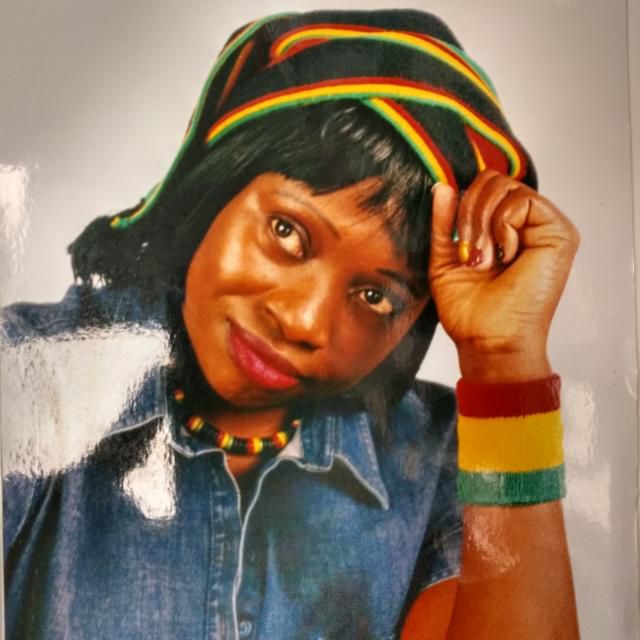
By 1989, at around 23 years old, she was touring West Africa. Her run of platinum-selling albums, by most accounts at least three, though some sources put the number as high as seven over her career, cemented the title that stuck with her for good: Queen of Nigerian Reggae. She has said in interviews that the title was first given to her by the late reggae legend Majek Fashek, who also gifted her the reggae wristband she became known for wearing, a gift given after a studio session in Lagos where they recorded together.
Don't MIss This Gist

Her success also opened doors outside music. In 1990, she became a brand ambassador for Pepsi, appearing in a commercial alongside other major Nigerian entertainment names of the era, including Yvonne Chaka Chaka, Charly Boy, and Femi Kuti.
She kept the momentum going into the early 1990s, releasing “Jah Pikin” in 1993, before the Nigerian music scene began shifting toward a more urban, street-driven sound championed by acts like Daddy Showkey.
Marriage, Struggles, and a Quiet Departure
Behind the platinum plaques and the packed West African tours, Ogholi’s personal life was far from the celebration her music suggested. She married Emma Ogosi, her producer and manager, and the couple had two children together. But the marriage did not last. In later interviews, Ogholi opened up about experiencing domestic violence during that period of her life, a difficult chapter she rarely spoke about publicly for years.
Following the separation, she left Nigeria for Paris, France, with her children, stepping away from the spotlight that had defined her twenties. For much of the 1990s and into the 2000s, she was largely absent from the Nigerian entertainment conversation, and rumours about her circulated in the vacuum.
Life in France and Humanitarian Work
Rather than fade away, Ogholi redirected her energy. She spent close to two decades volunteering with UNICEF in France, using her name recognition to support fundraising and awareness campaigns, including work connected to the prevention and treatment of polio in children.
She never fully stopped making music either. In 2018, she released “Peace in the World,” an album that folded jazz influences into her signature reggae style, a sign that even in a quieter chapter of her career, she was still evolving as an artist.
Don't MIss This Gist

The Comeback and Renewed Recognition
Around 2020, rumours resurfaced online, this time claiming that Ogholi had died. The claims spread across social media and blogs before Nigerian journalists tracked her down for comment, and she personally addressed the rumours through interviews with BBC Pidgin and Splash 105.5 FM Ibadan, confirming she was alive and already planning a return to active music.
That same year, she signed a five-year record, management, and distribution deal with Enorecords, a label owned by fellow reggae artist Winning Jah. Under the deal, she released an EP titled “Peace and Love” in August 2020, produced by the label’s in-house producer, Ayemere Joshua, known professionally as Jossy Joe. The project included a remix of her signature hit, “Happy Birthday.”
2020 also brought a different kind of recognition. She was honoured as Brand Ambassador of Hope and Peace for the Aid People Change Nigeria Charity and Orphanage Organisation, an appointment tied to a major humanitarian award event held across Nigeria and Ireland.
Legacy
It is difficult to overstate how much Evi Edna Ogholi shaped the sound of Nigerian reggae, especially considering she did it as a young woman in a genre almost entirely dominated by men at the time. She didn’t just make hit records, she made room for an entire region’s culture and language inside the Nigerian mainstream, long before the country’s music industry became as internationally connected as it is today.
Decades later, “Happy Birthday” still gets played at parties across Nigeria, often by people who have no idea who Evi Edna Ogholi is or where the song came from. That, in a strange way, is its own kind of legacy: music so deeply woven into everyday Nigerian life that it outlived the spotlight on the woman who made it.
She currently resides in France, where she continues to perform, record, and occasionally tour West Africa and Europe, decades after that first demo tape landed in Lagos.
Don't MIss This Gist

Frequently Asked Questions
When was Evi Edna Ogholi born?
She was born on July 6, though sources differ on the exact year, giving either 1965 or 1966.
Where is Evi Edna Ogholi from?
She is from Isoko in present-day Delta State, Nigeria.
What is Evi Edna Ogholi’s most famous song?
“Happy Birthday,” released in 1988, remains her most iconic and widely recognised song in Nigeria.
Who gave her the title “Queen of Nigerian Reggae”?
By her own account, the title was first given to her by the late Nigerian reggae legend Majek Fashek.
Is Evi Edna Ogholi still making music?
Yes. She released an EP, “Peace and Love,” in 2020 under Enorecords, and continues to perform.
Where does Evi Edna Ogholi live now?
She resides in France, where she has lived since leaving Nigeria in the early 1990s.