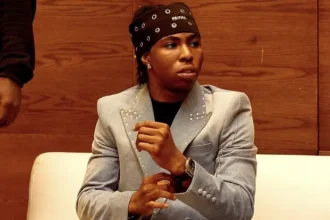







Barry Jhay returns with a 17-track sequel that repeats old wins instead of chasing new ones. Here’s why “Barrystar Vol 2” struggles to move the needle.
For nearly ten years, Barry Jhay has built his name on one dependable story: the hustler who made it out, still watching his back, still thanking God for every win. It’s a formula that once felt raw and real. On his new album, “Barrystar Vol 2,” that same story starts to feel like a song stuck on repeat.
The 17-track project, a follow-up to 2025’s “Barrystar Vol 1,” lands at a moment when Nigerian listeners are spoiled for choice. And that’s exactly the problem. Across 45 minutes, the son of late Fuji legend Alhaji Sikiru Ayinde Barrister leans so heavily on familiar Yoruba-English melodies, gratitude anthems, and prayers against enemies that individual songs blur into one long, indistinct stretch.
Since his 2020 breakout “Barry Back,” Barry Jhay has mined the same emotional territory: survival, faith, suspicion of “enemies,” and the good life money buys. It worked because it felt personal. Here, though, tracks like “Sati” and “Amaridi” feel like leftovers rather than new statements, with vocals so buried in the mix they barely register.
Don't MIss This Gist
It’s not all flat. “Igi Aruwe” stands out as a genuinely moving, reflective moment, brief but powerful enough that fans are already imagining a remix with names like Asake or Seyi Vibez attached. The gospel-tinged “Motide” also lands well, tapping into the spiritual yearning that made Barry Jhay compelling in the first place.
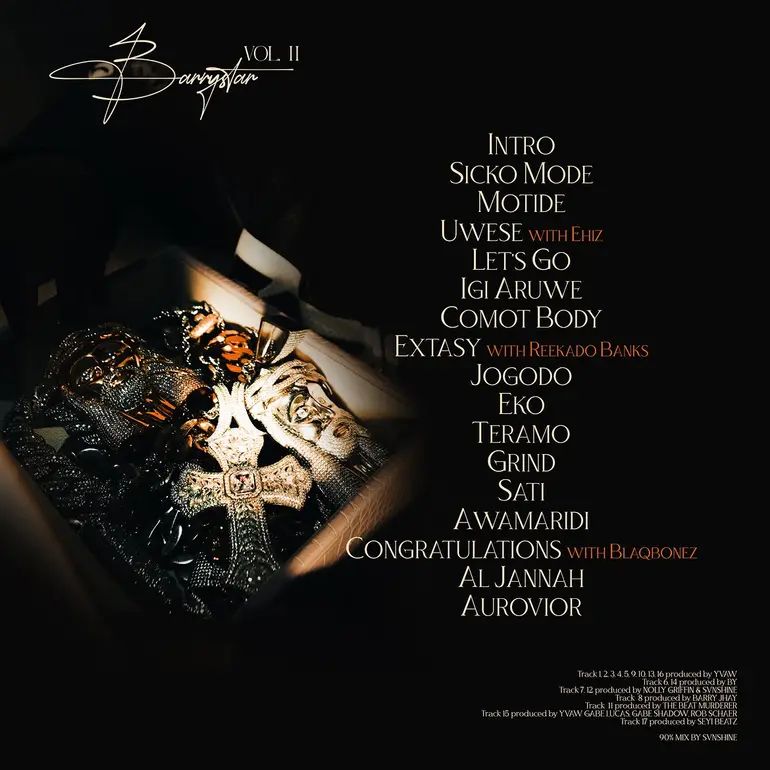
Elsewhere, the album sags. A Reekado Banks feature can’t lift the lifeless “Ecstasy.” A Blaqbonez collaboration falls flat on both ends. And a well-intentioned cross-cultural link-up with Ehizay ends up feeling forced rather than felt. By the time the album reaches its closing tracks, even patient listeners may find themselves checking how many songs are left.
Still, there’s something worth applauding: Barry Jhay’s refusal to abandon his Yoruba roots for a more generic, commercially safel pjb p sound, at a time when many of his peers are doing exactly that. His voice, when the production gives him room to breathe, still carries real emotional weight.

“Barrystar Vol 2” isn’t a disaster. It’s a reminder that an artist can be talented, sincere, and still run the risk of repeating himself into irrelevance. Barry Jhay has spent a decade telling one story exceptionally well.