Back then, 9 am to 5 pm meant waking up early. You get ready for work. Dealing with the traffic and sitting in the car for long periods of time on your way to work and back. It was simply the normal way of life.
If someone had told you that you could make a living remotely. Where you can go to meetings, work with other people, and launch a thriving career. Doing all these without getting up from the comfort of your own home, you might have been skeptical.
But that is not the case today.
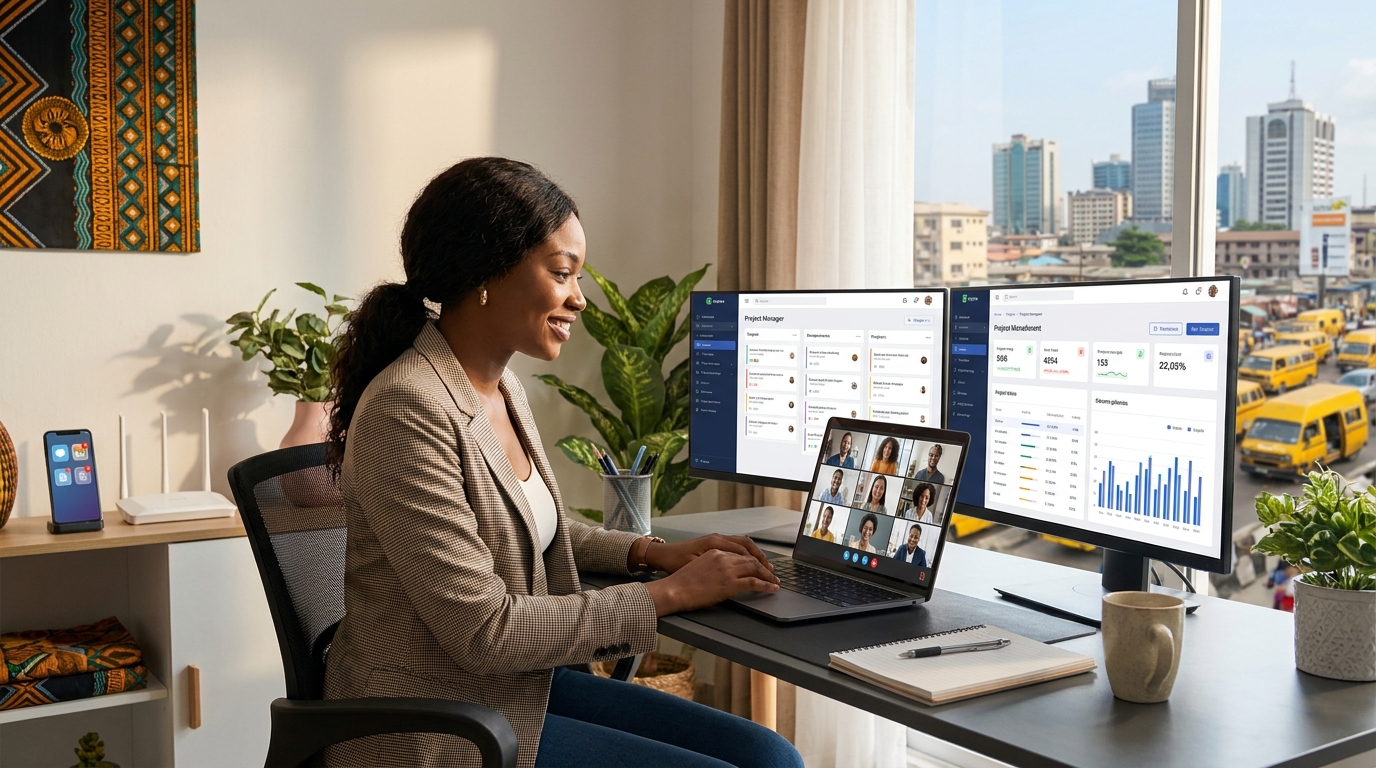
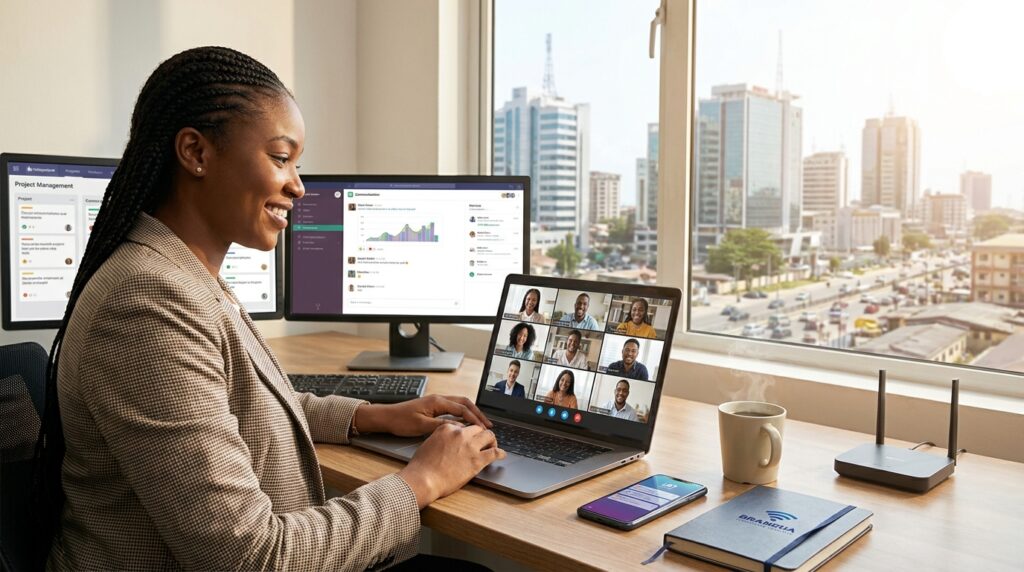
Being able to work remotely is no longer a privilege for a few technology workers. But a necessity for the majority. Rather, it has emerged as a growing livelihood of many Nigerians. Whether you’re on a customer service team, developing software, or writing, designing, marketing, and working as a virtual assistant, there are more professionals than ever who find that they can work pretty much anywhere they can get a stable internet connection.
Consequently, life is becoming quite different on a daily basis.
Perhaps the most obvious change is the amount of time you save. Consider it for a while. How many hours per week do you drive to and from work? The answer for people in urban areas such as Lagos, Abuja or Port Harcourt may come as a surprise.
Those hours are often recovered by being able to work from home. Rather than sitting in traffic, you can spend the time exercising. You may also choose to learn a new skill, spend time with your family, or even work on a new project that can boost your income.
There’s the money aspect to it, too.
The cost of transport keeps on going up in Nigeria, and if you have a job, your daily transportation expenses can eat a big part of your income. But, when you work remotely, many of those costs are gone or significantly lower. All of a sudden you’re saving money on transportation, work meals, and sometimes clothes as well.
While working remotely comes with all the new costs. Which of course, includes internet bills and electricity usage. However, many professionals still think that the cost benefits are still greater than the extra costs.
In addition to the financial incentives, remote working is also impacting people’s location.
In the past, many professionals would feel compelled to live near their workplace. This sometimes makes them end up paying more rent for the privilege that it is not too far to commute. But today remote employees are more flexible. There is a way to live in a less expensive place but work for a business in a different city or even a different country.
This change is opening up opportunities that were previously non-existent.
Surprisingly, telework is also helping to extend employment opportunities abroad. This allows Nigerian professionals to no longer restrict their job search area. They are no longer limited to their immediate neighborhood. Now you can make an application for a remote job with companies from around the globe. Companies, including those in Africa, Europe, North America and elsewhere.
Geographical limitations have become less relevant as the internet is increasingly used and digital collaboration tools are becoming more prevalent.
This can be a path to greater opportunities and better jobs for many professionals.
Changes have also taken place in learning and career development. Working remotely is technology-intensive, which means that many professionals are more at ease with the use of technology, virtual communication platforms, and virtual collaboration systems.
Consequently, lifelong learning is now an integral part of work life.
You might be at a webinar during lunchtime, taking part in online certification programs after hours, or learning new software that makes you more efficient. To put it simply, telecommuting can foster a culture of constant learning.
Meanwhile, there’s never been a more prominent focus on work-life balance.
For years, many Nigerians had the notion that success in a career is only found in physical offices working long hours. But remote working is now putting that notion to the test. More and more, professionals are understanding that productivity isn’t necessarily a measure of time at a desk but of quality of work.
This change makes for more flexibility. Have to travel to a family activity? Take care of a personal errand? Make an appointment with a doctor? For many, these activities are easier to manage while working remotely without compromising their work.
Nevertheless, it is not easy to work remotely.
The issue of power supply continues to be a major concern in Nigeria. The Internet is subject to interruptions, which may disrupt meetings and impact productivity. Others have issues of isolation because they have worked in long-term non-office settings.
Secondly, there’s a level of discipline involved in working from home. When no manager is physically present. You are left to your own devices for managing your time, staying focused and avoiding distractions.
In such circumstances, it can sometimes take a lot of willpower to stay productive when your bed, TV, and refrigerator are just a few steps away.
However, the trend of remote work keeps on rising despite the difficulties.
The Future of Remote work for Nigerian Professionals
Digital operations are becoming more common in businesses. And remote work is expected to continue remaining a significant aspect of Nigeria’s professional scene.
Not all of the traditional offices will go away, however. Instead, many organizations are opting for a hybrid model of work and remote work. With such models, a professional can reap the fruits of both while being productive.
What’s more important is that the definition of success is changing with remote working.
With the current job market, jobs are not as location-specific as they used to be, and more skills and skills-based necessitates adaptability and the ability to get things done. This opens up opportunities for people who are ready to try out new methods of working.
The truth is, remote working isn’t just about where you work but also how.
It is altering the way you spend your time. The way you handle your finances, the way you formulate your career and even the way you plan your day.
The office, however, may not be gone for good, but one thing is becoming ever more evident: the standard 9-to-5 schedule isn’t always the route to a successful career.
For many Nigerians, it could be one of the biggest changes in the workplace in this generation.