






Nollywood’s Ruth Kadiri breaks her silence on Nigeria’s food crisis. Her candid message is resonating with millions, and the numbers behind it are alarming.
Ruth Kadiri isn’t known for posting angry videos. The Nollywood actress typically shares glamour, faith, and behind-the-scenes moments from her films.

But this Tuesday morning, something different happened. She picked up her phone, looked tired, and recorded a message that has now sparked thousands of responses across Nigeria.
“If someone like me can feel it, I wonder what average Nigerians are going through,” she said, her voice heavy. The topic wasn’t a bad movie review or a casting dispute. It was something far more brutal: food.
Ruth didn’t stop at prices. She talked about something darker: what prolonged hunger does to people’s psychology.
“Poverty, what poverty does to people’s minds is like cancer, it eats away,” she said. “A lot of people are just going to be angry for the sake of it. Angry at their wives, angry at their kids, angry at their husbands.”
That’s the hidden crisis. It’s not just empty plateaues. It’s fathers snapping at children over nothing. Mothers crying in kitchens. Families crumbling under stress no one sees.
This isn’t just a feeling. Nigeria’s inflation rate climbed to 16.06% in April 2026, the highest it has been since late 2025, with food prices rising for the third month straight. Staples like garri, yam, tomatoes, ginger, and beef have all gone up.
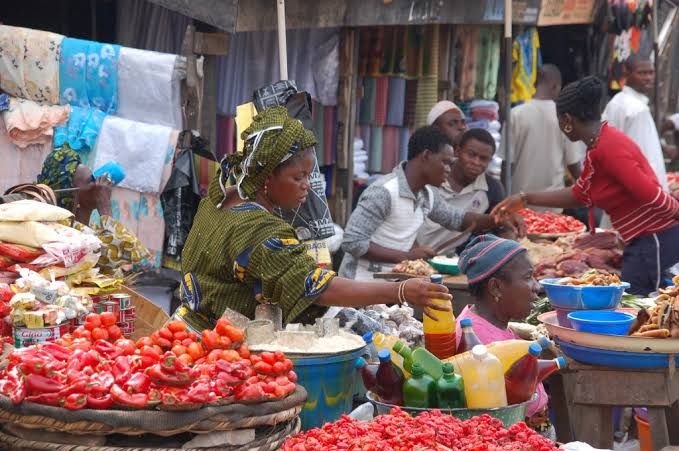
According to the National Bureau of Statistics, a Nigerian adult now needs at least ₦1,513 daily just to maintain a basic nutritious diet, a figure that has jumped more than 12% in one year.
For households on the ₦70,000 national minimum wage, that leaves almost nothing for rent, transport, school fees, or medicine after feeding is sorted. In states like Ekiti, Imo, and Abia, food alone can swallow nearly 90% of a monthly minimum wage paycheck.
Despite the challenges, Ruth believes in the resilience of Nigerians and the possibility of change. Solutions like supporting local farmers, improving distribution networks, and government policies targeting affordability could pave the way to relief.
Her message encourages both awareness and action, urging citizens, leaders, and stakeholders to work together to ease the burden of food insecurity.
In sharing her story, Ruth Kadiri doesn’t just highlight a problem; she inspires a conversation about dignity, survival, and hope for a future where no one has to sacrifice meals for bills.
She isn’t alone. Actor Kunle Remi publicly called out fuel costs earlier this year.
Davido admitted that entertainers, himself included, have been too quiet about the suffering ordinary Nigerians endure.
British-Nigerian rapper Skepta went straight to the top, tagging President Tinubu with a direct question: how much is enough?
The cultural wall between celebrity life and everyday Nigerian struggle is cracking and audiences are taking note.